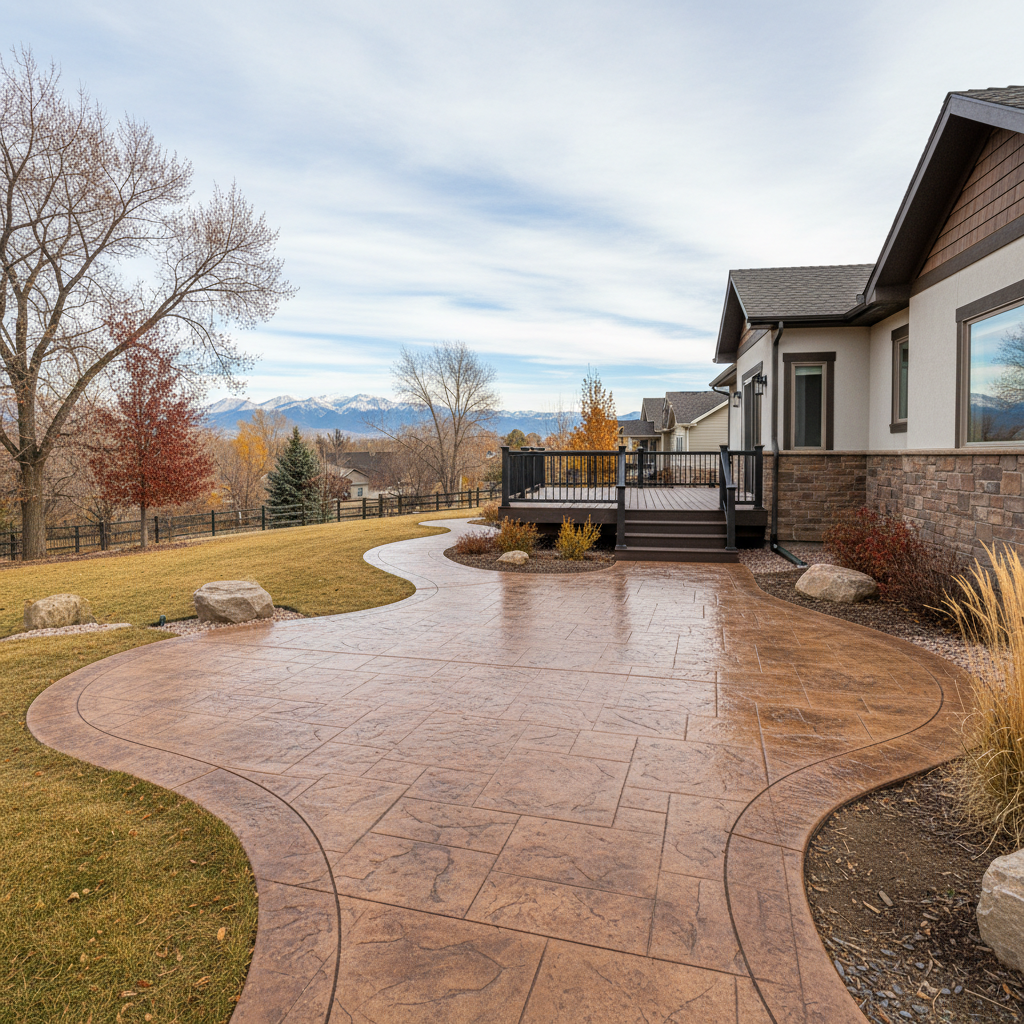
You've got stamped concrete, or you're thinking about it. Great choice! It looks fantastic and adds real curb appeal. But here in Aurora, our weather isn't exactly predictable. One day it's 70 and sunny, the next it's snowing. That kind of wild swing can really impact your stamped concrete, both during installation and over its lifetime. So, let's talk about what you need to know to keep it looking great.
When's the Best Time to Schedule Stamped Concrete Work?
This is probably the most common question I get. Everyone wants their patio or driveway done yesterday, but with concrete, timing is everything. For stamped concrete, you're looking for a sweet spot. Ideal temperatures are consistently between 50 and 80 degrees Fahrenheit. That allows the concrete to cure properly, and it gives us the best conditions for applying those intricate patterns and colors.
That usually means late spring, summer, and early fall here in Aurora. Think May through September, maybe even into early October if we get a mild year. We want to avoid pouring when there's a risk of freezing temperatures overnight right after the pour, or when it's scorching hot and dry. Freezing too soon can mess with the curing process, leading to a weaker slab. Too hot, and it dries out too fast, which can cause cracking and makes it harder to get a good stamp.
We also need a few days of dry weather. We can't be stamping in the rain, obviously, but even high humidity can affect how the release agent works and how the concrete sets up. So, when you call us at Coastal Concrete Solutions, we're not just looking at our schedule; we're looking at the forecast for the whole week.
How Does Aurora's Climate Affect Stamped Concrete?
Our Colorado climate is a real mixed bag, and that's the biggest challenge for any outdoor concrete. We've got those intense sunny days, rapid temperature changes, and of course, the freeze-thaw cycles. Those cycles are the real enemy. Water gets into tiny pores in the concrete, freezes, expands, and then thaws. Over time, this constant expansion and contraction can lead to spalling, cracking, and surface deterioration.
We also deal with pretty dry conditions a lot of the year, which means concrete can dry out too quickly if not properly managed during curing. And let's not forget our expansive clay soils, especially common in areas like the Tollgate Crossing neighborhood. If the ground underneath isn't prepped right, shifting soil can put stress on your slab, leading to cracks even with the best concrete work.
Protecting Your Stamped Concrete Year-Round
Okay, so you've got this beautiful stamped concrete. How do you keep it that way for years? It's not set-it-and-forget-it, but it's not super high maintenance either. It's mostly about smart prevention.
- Sealing is Key: This is probably the most important thing. We apply a high-quality sealer once the concrete has cured. This sealer acts as a protective barrier against moisture, UV rays, and general wear and tear. You'll want to reapply that sealer every 2-3 years, sometimes more often for high-traffic areas or if it looks like it's wearing thin. It's like sunscreen for your concrete.
- Clean Regularly: A simple sweep and occasional rinse with a hose is usually enough. For tougher dirt, use a mild detergent and a soft brush. Avoid harsh chemicals or pressure washers set too high, as they can strip the sealer or damage the surface.
- Watch Out for De-icers: This is a big one for winter. Many de-icing products contain salts that are incredibly corrosive to concrete, even sealed concrete. I always tell folks to use sand for traction or de-icers specifically labeled as concrete-safe. Calcium chloride is generally okay, but sodium chloride (rock salt) is a no-go. Shovel snow promptly to reduce the amount of time moisture sits on the surface.
- Address Stains Quickly: Oil, grease, rust — these can all leave unsightly marks. The sooner you clean them up, the better your chances of preventing a permanent stain.
- Mind Your Landscaping: Make sure your drainage is good around your stamped concrete. You don't want water pooling against it, especially in winter. Trim back plants that might drop berries or leaves that could stain the surface.
Taking these steps will go a long way in extending the life and beauty of your stamped concrete. It's an investment, and like any investment, a little care goes a long way. If you've got questions about your specific project or need some advice on maintenance, don't hesitate to give us a call at Coastal Concrete Solutions. We're always happy to help our Aurora neighbors keep their concrete looking its best.