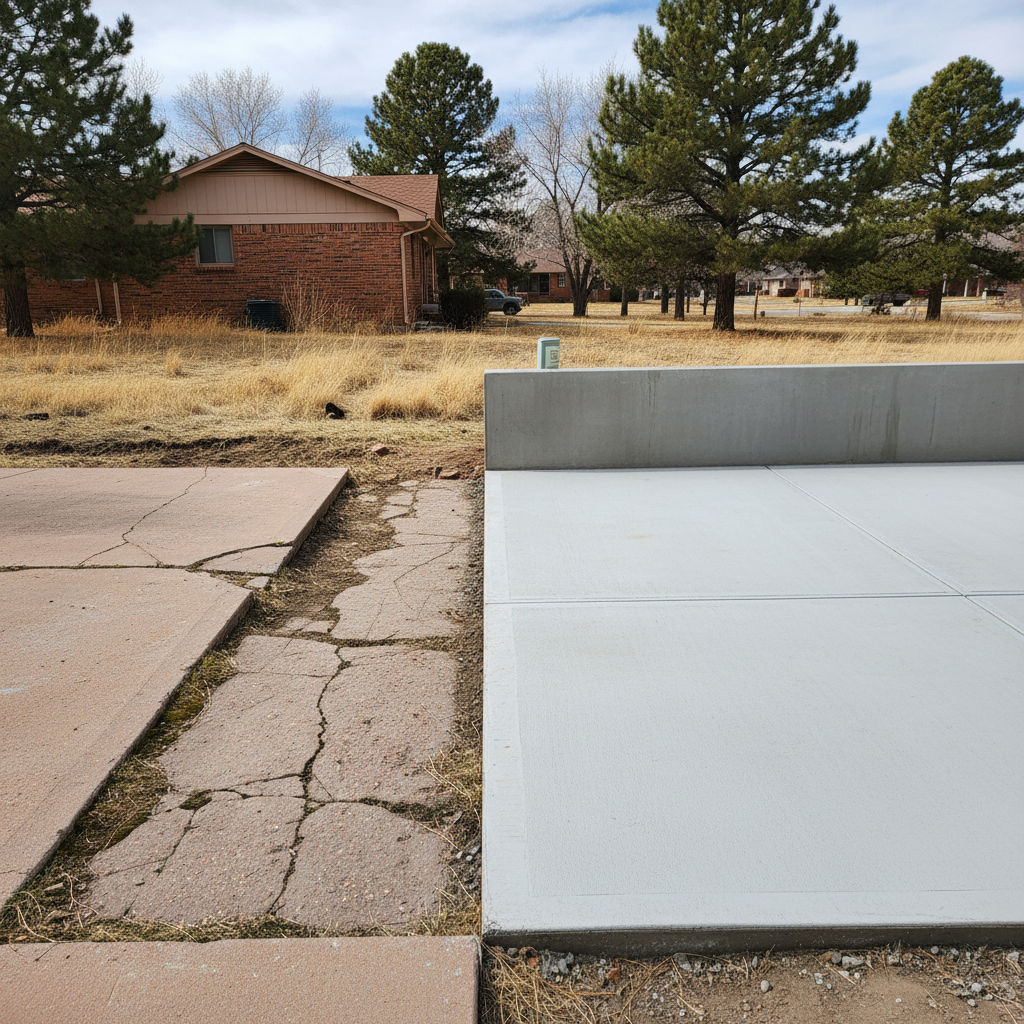
Alright, let's talk foundations. If you're building a new home, adding on, or even just thinking about what's under your feet, you've probably heard about slab foundations and crawl spaces. For folks here in Aurora, especially with our expansive clay soils that can really shift, picking the right one isn't just about cost; it's about long-term stability and comfort. I've seen plenty of both, and each has its pros and cons. Let's dig into it.
Slab-on-Grade Foundations: The Basics
A slab-on-grade foundation is pretty straightforward: it's a thick, reinforced concrete slab poured directly on the ground. Sometimes it's a monolithic pour, meaning the footings and the slab are poured at the same time. Other times, the footings are poured first, and then the slab goes on top. The key is that your home sits right on that concrete, which is directly on the soil.
Pros of Slab Foundations:
- Cost-Effective: Generally, a slab is cheaper to build upfront. There's less excavation, less material (no walls, no separate floor joists for the main level), and it's quicker to pour. That's a big deal when you're looking at overall project budgets.
- Faster Construction: Because it's simpler, a slab can be poured and ready for framing pretty fast. You're not waiting on multiple stages of foundation work.
- Energy Efficiency: Slabs can be more energy-efficient if properly insulated. There's no open air space underneath to heat or cool, which can reduce heat loss or gain through the floor.
- Pest Resistant: With no crawl space, you've got fewer entry points for pests like rodents and insects.
Cons of Slab Foundations:
- Plumbing Access: This is a big one. If you have a plumbing leak under a slab, it's a major headache. You're looking at breaking up concrete to get to the pipes. It's disruptive and expensive.
- Moisture Issues: Without proper vapor barriers and drainage, moisture can wick up through the slab, leading to humidity problems inside your home or even flooring issues.
- Soil Movement Sensitivity: Here in Aurora, with our notorious expansive clay soils, a slab can be more susceptible to cracking if the soil swells and shrinks significantly. While proper compaction and rebar help, it's still something to consider.
- Lack of Storage: You don't get any extra storage space, which can be a bummer for holiday decorations or extra gear.
Crawl Space Foundations: What's Under There?
A crawl space foundation involves building short walls (usually concrete block or poured concrete) on top of footings, creating a shallow space between the ground and the first floor of your home. The floor of your house is then built with joists and subflooring over this space.
Pros of Crawl Space Foundations:
- Easier Access for Utilities: This is where crawl spaces really shine. Plumbing, electrical, and HVAC lines are all accessible. If you have a leak or need to run new wiring, it's a whole lot easier (and cheaper) to get to.
- Flexibility for Remodels: Want to move a wall or add a bathroom? It's much simpler to re-route utilities in a crawl space.
- Elevated Home: Your house sits a bit higher off the ground, which can be a nice aesthetic for some home styles and can help with drainage around the perimeter.
- Soil Movement Resilience: A well-engineered crawl space can sometimes handle minor soil movement a bit better than a slab, as the foundation walls and footings are designed to distribute loads differently.
- Some Storage: While not a full basement, you do get a little extra space for storage, though it's often not conditioned.
Cons of Crawl Space Foundations:
- Higher Upfront Cost: Generally, crawl spaces are more expensive to build than slabs. You've got more excavation, more concrete for walls, and then all the framing for the floor system.
- Potential for Moisture and Pests: If not properly sealed and ventilated, crawl spaces can become damp, leading to mold, mildew, and attracting pests. This is a common issue I see around older homes in areas like Stapleton or even some of the older parts of Aurora.
- Energy Loss: An unconditioned or poorly insulated crawl space can be a major source of heat loss in the winter and heat gain in the summer, driving up energy bills. Encapsulation can mitigate this, but it adds to the cost.
- Radon Accumulation: Colorado is a high radon state. Crawl spaces can accumulate radon gas if not properly mitigated, requiring a radon system.
So, Which One Should You Choose for Aurora?
Look, there's no single