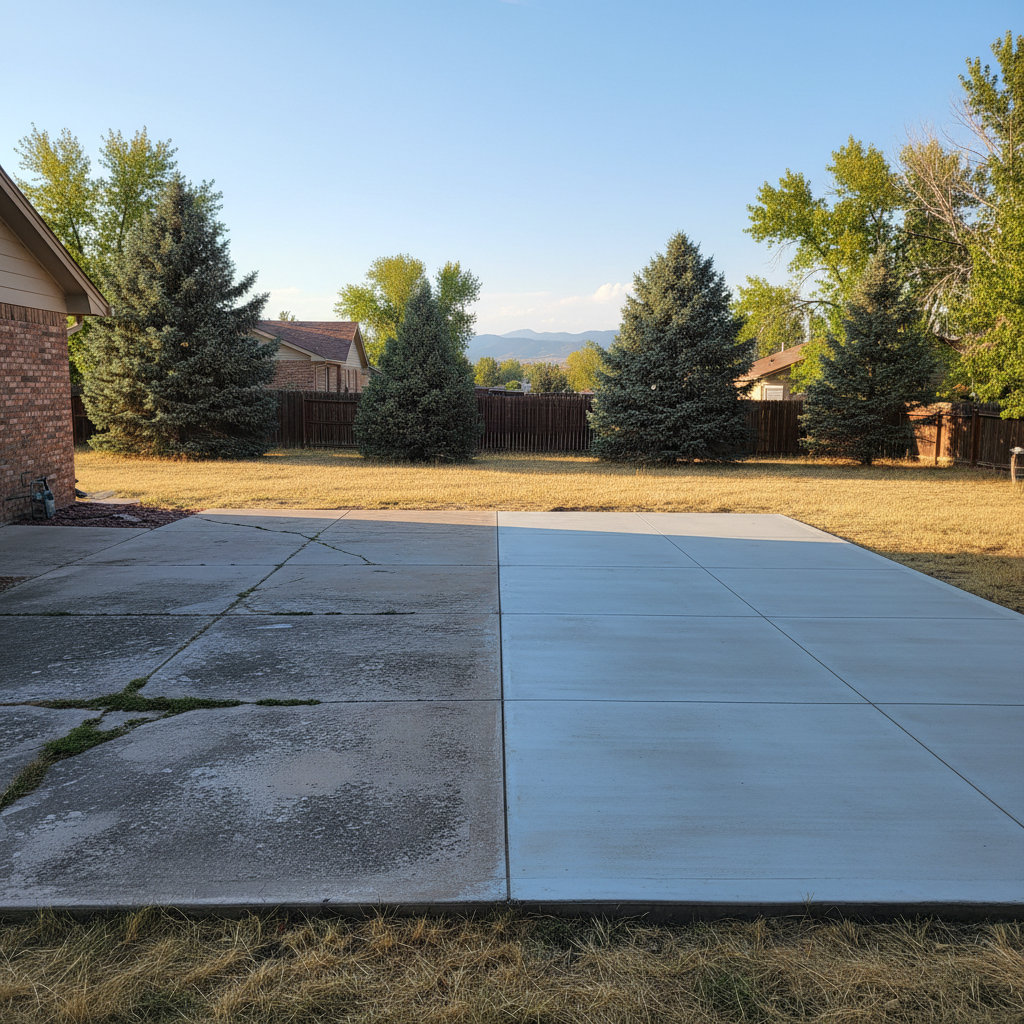
Alright, let's talk about that outdoor space you're looking to upgrade. Maybe it's a new patio, a walkway, or even your driveway. You've got options, and two big ones that come up all the time are poured concrete and concrete pavers. I see folks in Aurora wrestling with this decision regularly, so let's cut through the noise and figure out what makes sense for you.
Poured Concrete: The Tried and True
When most people think 'concrete,' they're usually picturing poured concrete. It's that solid, continuous slab you see everywhere. We're talking about mixing cement, aggregates, and water, then pouring it into a form, letting it cure, and finishing the surface. Honestly, it's been around forever for a reason.
The Good Stuff About Poured Concrete
- Cost-Effective: Generally speaking, poured concrete will be your more budget-friendly option upfront. We can cover a larger area quicker, which naturally keeps labor costs down. If you're looking for a solid, durable surface without breaking the bank, this is often the way to go.
- Durability: A properly installed concrete slab is incredibly strong; it can easily last for decades. It stands up to heavy loads – think vehicles on a driveway – and doesn't shift or settle as easily as individual units can, assuming, of course, the base is prepped right.
- Low Maintenance: Once it's cured, there's not a whole lot you need to do. A good seal every few years helps, and you'll want to keep it clean, but you're not dealing with weeds popping up between joints like you might with pavers.
- Versatility: While we're not talking about decorative concrete in this post, even standard poured concrete can be finished in different ways – a broom finish for traction, smooth trowel, or even an exposed aggregate look.
Where Poured Concrete Can Be a Headache
- Cracking: This is the big one everyone worries about, and for good reason. Colorado's freeze-thaw cycles are brutal. Water gets into tiny pores, freezes, expands, and pushes the concrete apart. We use control joints to encourage cracks to form in specific, less visible lines, but you can't completely eliminate the risk of a random crack. Our expansive clay soils in areas like South Aurora also don't do us any favors, causing movement that can stress slabs.
- Repair Challenges: If a section of your poured concrete cracks or gets damaged, repairing it seamlessly is tough. You'll often end up with a patch that doesn't quite match the original, or you're looking at tearing out and replacing a whole section, which can be costly.
- Curing Time: You can't just pour it and use it right away. It needs time to cure and gain strength, which means you'll be off that area for a few days, sometimes longer depending on the project and weather.
Concrete Pavers: The Interlocking Alternative
Pavers are individual units, usually made of concrete, that interlock or fit together tightly over a prepared base of gravel and sand. They come in all sorts of shapes, sizes, and colors, giving you a lot of design flexibility.
Why Pavers Might Be Right For You
- Flexibility & Crack Resistance: This is where pavers really shine, especially in our climate. Because they're individual units, they can flex and move slightly with ground shifts and freeze-thaw cycles without cracking like a solid slab. If one paver gets damaged, you just replace that single unit, not a whole section.
- Aesthetics: You've got a huge range of design options. Different colors, patterns, textures – you can create a really custom look that's hard to achieve with standard poured concrete. They can mimic natural stone, brick, or have a very modern feel.
- Drainage: Many paver systems are designed to be permeable, allowing water to drain through the joints and into the ground below. This can be a big plus for managing stormwater runoff and can even help with local regulations in some areas.
- Easier Repairs: As I mentioned, if a paver gets stained or broken, you can pop it out and put a new one in. Much simpler than concrete repair.
The Downsides of Pavers
- Higher Upfront Cost: Generally, pavers are more expensive than poured concrete. The materials themselves cost more, and the installation is more labor-intensive because each unit has to be laid individually.
- Weed Growth & Joint Maintenance: Those joints between pavers? They're prime real estate for weeds, moss, and ants. You'll need to sweep sand into them periodically to keep them stable and potentially use polymeric sand to harden the joints and deter growth. It's more maintenance than a solid slab.
- Settling & Shifting: While they handle freeze-thaw better, if the base isn't prepared perfectly – and I mean *perfectly* – pavers can settle unevenly or shift over time, creating trip hazards or an uneven surface. This is why a quality installation is absolutely critical.
- Cleaning: The textured surfaces and joints can sometimes make cleaning a bit more involved than a smooth concrete slab.
So, What's My Recommendation for Aurora Homeowners?
Look, I've poured a lot of concrete and installed a lot of pavers here in Aurora. Both have their place. If you're on a tighter budget, need a large, durable surface, and don't mind the occasional hairline crack that might develop over the years, poured concrete is a fantastic, cost-effective choice. We'll make sure it's properly reinforced and has the right control joints to manage cracking as best we can.
However, if your budget allows for it, and you're looking for maximum flexibility against our crazy Colorado weather, especially those freeze-thaw cycles, and you value the aesthetic options and easier individual repairs, then concrete pavers are often the superior long-term solution. They handle ground movement and temperature swings with more grace than a solid slab.
For something like a driveway that takes a lot of abuse, I often lean towards a well-installed paver system because of its inherent flexibility and repairability. For a simple, large patio where budget is key, poured concrete is a solid winner.
Ultimately, it comes down to your priorities: budget, aesthetics, and how much you want to worry about potential cracking down the line. Give us a call at Coastal Concrete Solutions, and we can walk through your specific project, look at your site, and help you make the best decision for your home.