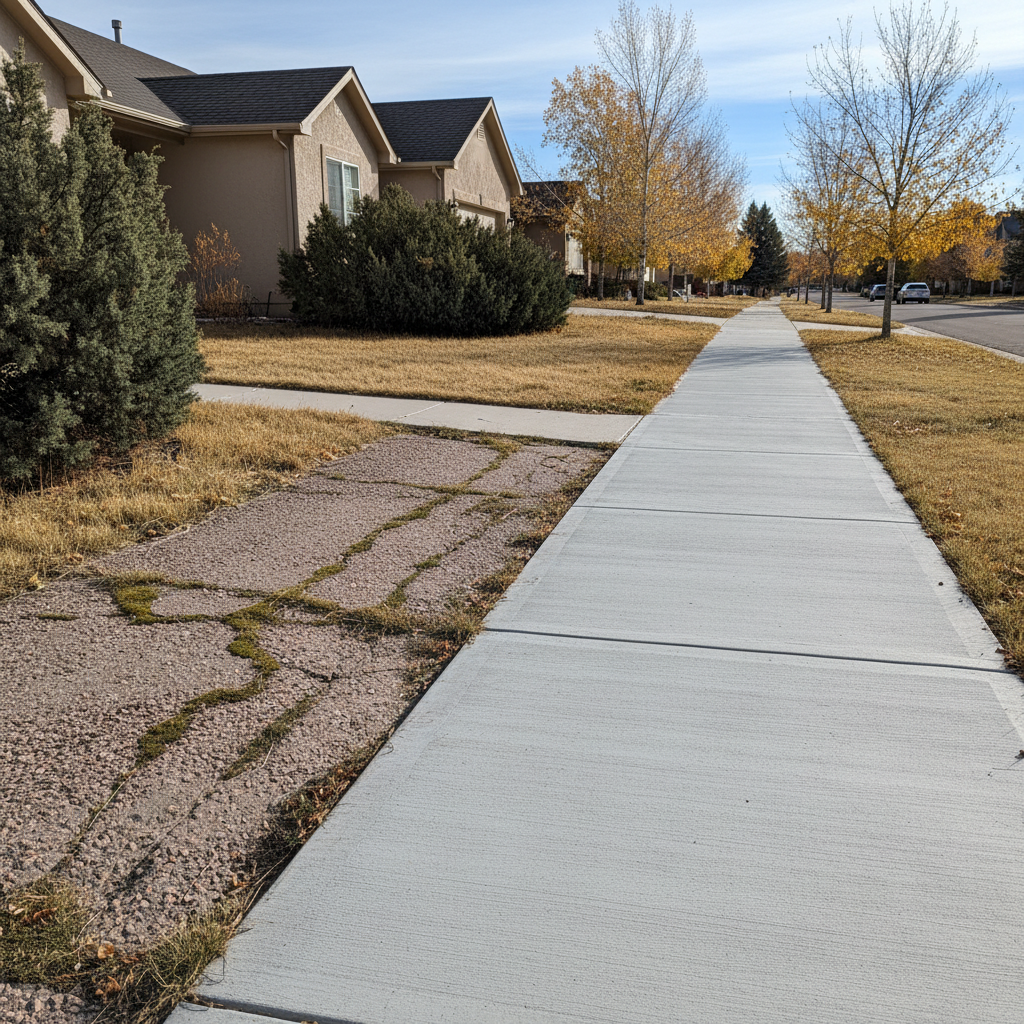
Alright, let's talk sidewalks. You're looking to put in a new one, maybe replace an old cracked mess, or just add some curb appeal to your Aurora home. The big question usually comes down to two main options: traditional poured concrete or concrete pavers. As someone who's been pouring and laying for years here in Colorado, I've seen both done right, and both done wrong. Let's get into what you really need to know.
Poured Concrete Sidewalks: The Classic Choice
Poured concrete is what most people picture when they think of a sidewalk. It's a classic for a reason – it's generally strong, durable, and pretty straightforward to install. We mix it up, pour it, finish it, and let it cure. Simple, right?
Cost
Upfront, poured concrete usually wins on price. It's typically less expensive per square foot for the material and labor compared to pavers. This is a big factor for many homeowners, especially if you're doing a long stretch of sidewalk or a large patio area. You get a solid, functional surface without breaking the bank.
Durability & Maintenance
A well-poured concrete sidewalk, with the right mix and proper expansion joints, can last for decades. We're talking 30, 40, even 50 years if it's maintained. The biggest enemy here in Aurora is our freeze-thaw cycles. Water gets into tiny cracks, freezes, expands, and then you get spalling or bigger cracks. That's why proper drainage and sealing are crucial. Maintenance is pretty minimal: keep it clean, maybe seal it every few years, and address any small cracks before they become big problems. If you do get a major crack or a section sinks, though, repair can be tricky. You often have to cut out and replace an entire section, which can leave visible seams.
Appearance
Aesthetically, poured concrete is… well, it's concrete. You can get it broom-finished for a non-slip texture, or even stamped and colored to mimic other materials like stone or brick. But at its core, it's a monolithic slab. It can look clean and modern, but some folks find it a bit plain. The biggest downside visually is when repairs are needed. A patch rarely blends perfectly with the original concrete, so you end up with a patchwork look.
Concrete Paver Sidewalks: The Flexible Option
Pavers are individual concrete units, kind of like very thick bricks, that interlock to form a surface. They're laid over a prepared base of gravel and sand, not mortared together like bricks on a wall. This interlocking system is where they get a lot of their strength and flexibility.
Cost
Generally, pavers are going to cost more upfront than poured concrete. The materials themselves are more expensive, and the labor involved in laying each individual unit, ensuring proper leveling and compaction, takes more time. So, if budget is your absolute top priority, pavers might be a stretch.
Durability & Maintenance
This is where pavers really shine, especially in a place like Aurora. Because they're individual units, they have a natural flexibility. When the ground shifts, or we get those intense freeze-thaw cycles, the pavers can move slightly with the ground without cracking. You won't see the big, ugly cracks you get in poured concrete. If a section sinks, or a paver gets damaged, it's usually pretty easy to lift out the affected pavers, re-level the base, and put them back. No need to tear out huge sections. Maintenance involves sweeping in joint sand periodically and maybe cleaning off weeds that try to sprout between them. Weeds are less of an issue if you use polymeric sand in the joints.
Appearance
Pavers offer a huge range of aesthetic options. You can get them in all sorts of shapes, sizes, colors, and textures. This means you can create really custom, beautiful designs that complement your home's style. Want something rustic? Modern? Classic brick look? There's a paver for it. The joints between the pavers add visual interest that you don't get with a solid slab of concrete. They just tend to look a bit more upscale and finished.
My Take for Aurora Homeowners
Here's the deal. For a basic, functional, and budget-friendly sidewalk, poured concrete is a perfectly fine choice. If you're careful about drainage, seal it regularly, and don't mind the occasional crack repair that might not blend perfectly, it'll serve you well. It's a solid workhorse.
However, if you're looking for something that handles our Colorado climate better, offers more design flexibility, and is significantly easier to repair down the road, I'm going to lean towards pavers. The initial cost might be higher, but the long-term benefits, especially with our expansive clay soils and temperature swings common in areas like the Tollgate Crossing neighborhood, often make them worth it. The ability to easily fix a sunken spot or replace a damaged unit without tearing up a whole section is a huge advantage.
Ultimately, both are good options when installed correctly. What's 'correct' depends on a lot of factors, including your specific property, the soil conditions, and how much traffic the sidewalk will see. If you're still on the fence, give us a call at Coastal Concrete Solutions. We can come out, take a look at your situation, and give you an honest recommendation based on what you're trying to achieve. We've laid a lot of both over the years, and we'll make sure you get a sidewalk that lasts.