Acid-Based vs. Water-Based Concrete Stains: What's the Difference?
You're thinking about staining your concrete, which is a smart move. It really jazzes up a patio, basement floor, or even a driveway, and it adds a layer of protection too. But then you start looking into it, and you see 'acid-based' and 'water-based' stains. What's the deal? I get this question all the time from folks right here in Aurora, from the older homes in Hoffman Heights to the newer builds out by Southlands.
Let's cut right to it. These aren't just different brands; they're fundamentally different ways of coloring concrete. And knowing the difference is key to getting the look you want and making sure it lasts, especially with our crazy Colorado weather.
Acid-Based Stains: The Reactive Option
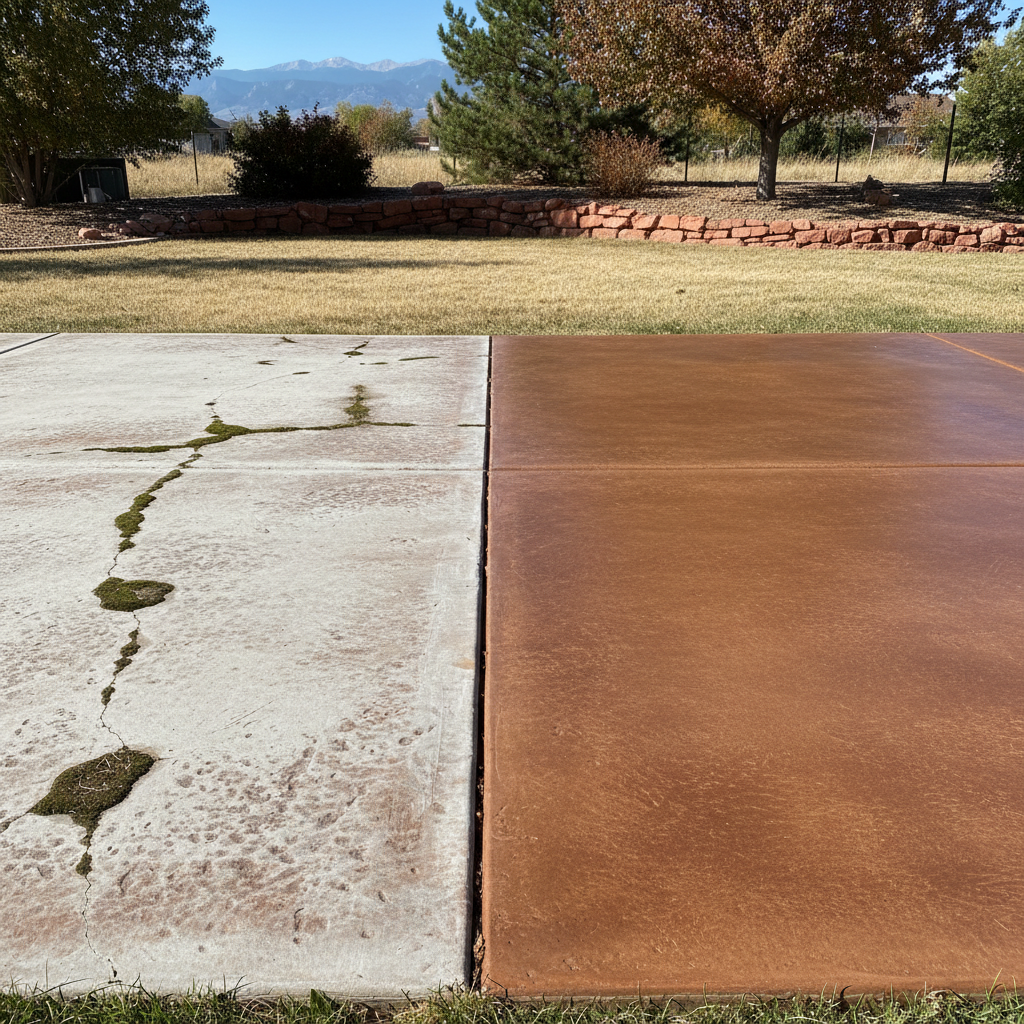
Acid stains, sometimes called reactive stains, aren't really 'paint' for your concrete. They don't just sit on top. Instead, they contain metallic salts that chemically react with the lime (calcium hydroxide) in your concrete. This reaction creates a permanent, translucent color effect that's unique to each slab. Think of it like a natural patina.
Appearance: This is where acid stains really shine for a lot of people. You get earthy, mottled, translucent tones – browns, tans, greens, and blues are common. It looks very natural, almost like stone. Because it's a chemical reaction, no two floors will ever look exactly alike. It's got character.
Durability: Since the color is literally embedded in the concrete, it's incredibly durable. It won't chip, peel, or fade from UV exposure like a topical coating might. Once it's sealed properly, it's tough as nails. You're not going to wear this color off.
Cost: Generally, acid staining can be a bit more involved to apply because of the chemical reaction and the neutralizing steps. This might mean the initial application cost is a little higher than a simple water-based application, but it's often worth it for the unique look and longevity.
Maintenance: Super easy. Once sealed, just regular sweeping and mopping. You'll want to re-seal it every few years, especially if it's an outdoor surface or sees a lot of traffic. That's true for any stained concrete, though.
Limitations: The color palette is limited to those earthy tones. You won't get bright reds, pure whites, or vibrant blues. Also, the final color can be unpredictable because it depends on the concrete's specific composition. If you've got a really old slab, or one that's been patched a lot, the reaction might be uneven. It won't hide existing flaws or discoloration in the concrete; it'll actually highlight them, which can be a pro or a con depending on your taste.
Water-Based Stains: The Pigmented Choice
Water-based stains, on the other hand, are more like a very thin, penetrating paint. They contain finely ground pigments that are suspended in a water-based acrylic or polymer solution. When applied, these pigments penetrate the pores of the concrete and leave a color behind. They don't react chemically with the concrete.
Appearance: You get a much wider range of colors here – pretty much any color you can imagine, from vibrant reds and blues to opaque grays and blacks. The look is more consistent and uniform than acid stains. You can achieve solid, opaque colors or semi-transparent effects depending on the product and application. If you want a specific color match, this is your best bet.
Durability: Good, but generally not as inherently durable as acid stains. Because the pigments are sitting in the pores rather than reacting with the concrete, they can be more susceptible to fading over time, especially with heavy UV exposure. A high-quality sealer is absolutely crucial to protect the color and prevent wear.
Cost: Often a bit less expensive to apply initially, especially if you're going for a simple, single-color application. The process is usually less complex than acid staining.
Maintenance: Similar to acid stains – sweep, mop, and re-seal as needed. Again, that sealer is your best friend for long-term color retention.
Limitations: Can look less natural than acid stains, sometimes a bit more 'painted.' If not sealed properly, or if you use a lower-quality product, fading can be an issue. They can also show wear patterns more easily in high-traffic areas if the sealer wears thin. They also won't hide significant concrete imperfections, though they might mask minor ones better than acid stains.
My Recommendation for Aurora Homeowners
So, which one should you pick for your Aurora home? Here's my honest take:
For outdoor concrete – patios, walkways, pool decks – I lean towards acid-based stains. Why? Our Colorado sun is intense. The UV rays here are no joke, and they'll fade a water-based stain faster if it's not perfectly maintained. Acid stains, because the color is part of the concrete itself, hold up much better to that kind of exposure. Plus, that natural, mottled look really complements the rugged beauty of our landscape.
For indoor concrete – basements, garage floors, interior living spaces – it's more of a toss-up, but I often recommend water-based stains if you have a very specific color in mind. If you want a bright blue for a kid's playroom or a specific shade of gray to match your modern decor, water-based is the way to go. You don't have the same intense UV concerns indoors, so the durability difference isn't as pronounced, as long as you use a good quality sealer.
Now, if you're looking for that classic, earthy, natural stone look, even indoors, acid stain is still a fantastic choice. It just comes down to your aesthetic preference and how much control you want over the exact final color.
Ultimately, both options can give you a beautiful, durable concrete surface. It just depends on the look you're going for, where the concrete is located, and your budget. Coastal Concrete Solutions has worked with both types of stains all over Aurora, and we can help you figure out which one makes the most sense for your project. Don't hesitate to give us a call to talk it through.